
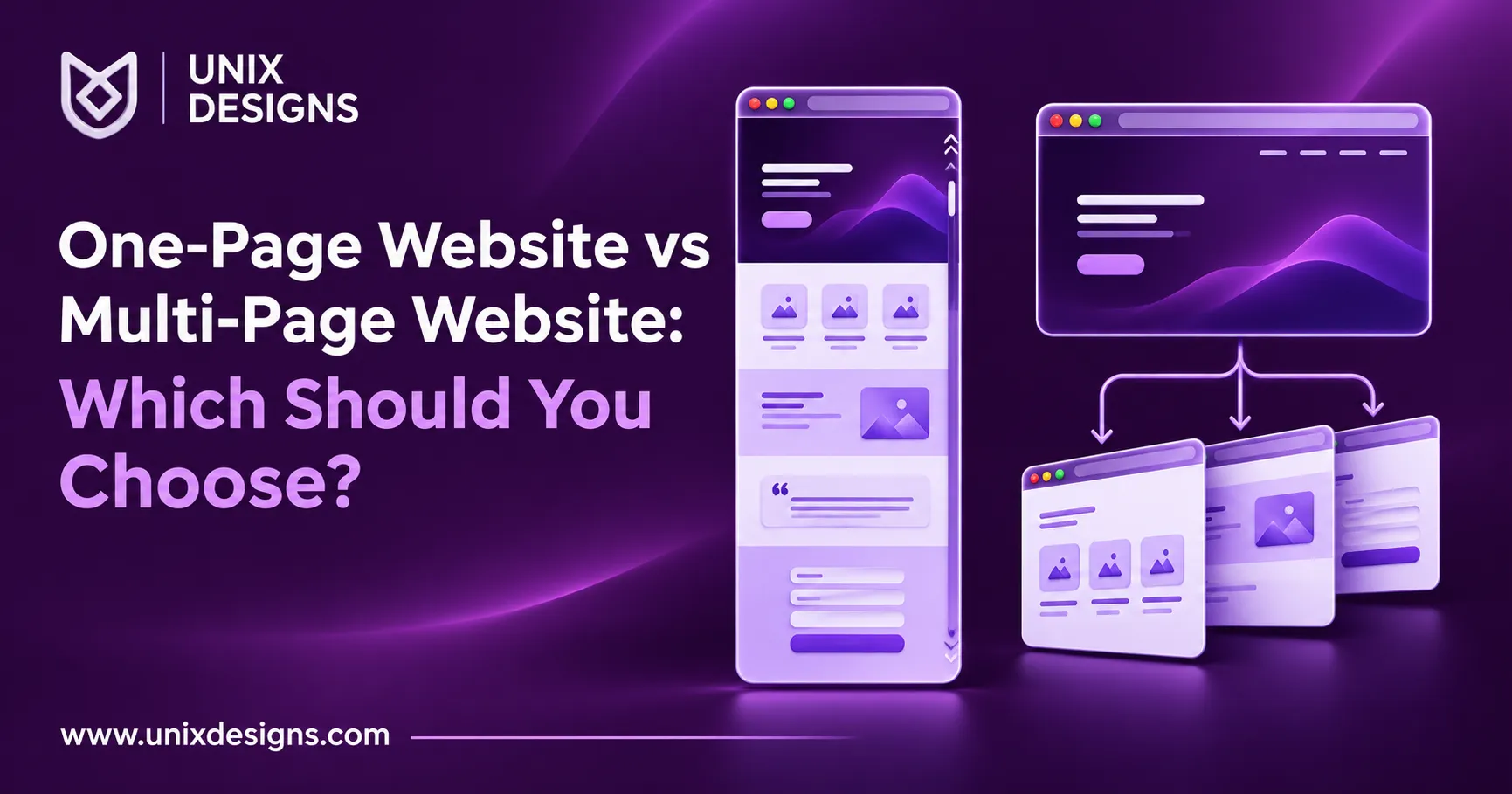
The choice between a one-page website vs multi-page website comes down to what customers need before they take the next step. If you offer one clear service and most visitors just want to see examples and send an enquiry, one page can work well. If customers need to compare services, check products, or read detailed project information, separate pages are usually more useful.
Imagine someone searching for an airport transfer in Sri Lanka. A single page can show the service area, vehicle options, and a WhatsApp enquiry button. But if the company also offers wedding transport, island tours, and self-drive rentals, each customer arrives with different questions. Giving each service its own page makes those answers easier to find and share.

One-Page Website vs Multi-Page Website: What’s the Difference?
A one-page website puts its main content on one URL. Visitors scroll through sections such as About, Services, Projects, and Contact. A menu can still link directly to those sections, so visitors don’t have to scroll from the top every time.
A multi-page website gives topics their own URLs. A customer can open a specific service page from Google, share it on WhatsApp, or bookmark it for later. The homepage introduces the business and points visitors to the information they need.
The distinction is about how you organise information. A single page can contain a surprising amount of detail, but once several sections need lengthy explanations, separate pages often make browsing simpler.
When a One-Page Website Makes Sense
Choose a one-page layout when your offer is easy to explain and visitors share a similar goal. It can suit a freelancer, a new consultancy with one core service, or a business that relies on referrals and needs somewhere to send interested customers.
For example, a photographer could show a selection of work, explain where they operate, answer a few booking questions, and provide an enquiry form. A potential client can see enough to decide whether to get in touch without clicking through several short pages.
This format can also help you launch with the content you already have. Plan for expansion if you expect to add services later. Ask your developer whether you’ll be able to add pages using the same design and how the navigation will adapt.
When a Multi-Page Website Is the Better Fit
Separate pages make sense when customers come to you for different reasons. A construction company, for instance, might handle new homes, renovations, and commercial fit-outs. Someone planning a shop renovation wants examples and information specific to that job. A page dedicated to commercial work can answer those questions without asking them to scroll past unrelated services.
A multi-page structure also suits businesses that expect to publish regularly. A resort can give rooms, dining, and experiences their own space. An online store can organise products into categories and explain delivery on a separate page that customers can return to.
Give each page a purpose. If two service pages would answer almost exactly the same questions, consider combining them until you have enough useful information to justify the split.
One-Page Website vs Multi-Page Website for SEO
A one-page website can appear in search results. Its main limitation is that the core sections share a URL and page title. That can work for a focused offer, but it gives you less room to build distinct pages around different customer needs.
A multi-page site can give each substantial topic its own title, content, and links. For example, an education provider can create separate pages for English classes and IT courses, with the relevant schedules and entry details on each. Google’s SEO Starter Guide explains how descriptive titles, clear organisation, and useful links help readers and search engines understand a site. developers.google.com
One-Page Website vs Multi-Page Website: Which Is Easier to Grow?
Look at what you expect to publish over the next year. If you plan to add service guides, case studies, or articles, build a structure that lets readers find and share those resources. If your priority is simply helping referred customers verify your business and contact you, a focused page may already do the job.
More pages don’t automatically improve rankings. Start with the questions your customers ask, then give each distinct topic enough space to answer them properly.
Compare the Cost and Mobile Experience
A one-page project may cost less when it requires fewer layouts and less content. However, a long page with video, animations, several galleries, or a custom booking form can still take considerable work. When comparing website design packages, ask what the quote covers: copywriting, images, revisions, testing, hosting, and ongoing support can affect the total.
Try the proposed layout from a customer’s point of view. On a single page, can someone jump straight to pricing or contact details? On a multi-page site, does the menu make it clear where to find the right service? Test the route on a phone, including the last step: making a call, sending a message, or submitting a form.
Can You Use Both Approaches?
Yes. A business can have a multi-page website and use a focused landing page for an advertising campaign. For example, a tour operator might send visitors from an airport transfer advert to a page that explains pickup locations, vehicle capacity, and how to enquire. Visitors who want an island tour can find the wider range of services through the main website.
You can also begin with one page and expand when there’s a reason to. If customers keep asking about the same service or you’ve gathered enough project examples to build a portfolio, give that material its own page. Keep the homepage focused on introducing the business and helping visitors decide where to go next.
Which Website Structure Should Your Business Choose?
Write down your three most common customer questions. If one short page can answer them and guide visitors to a clear action, start there. If the answers depend on which service, product, or location the customer is interested in, plan separate pages around those needs.
If you’re still weighing a one-page website vs multi-page website, browse the Unix Designs portfolio and explore our web design and development services. Then contact Unix Designs with your services, your main customer goal, and what you’d like to add later. Those details will help us recommend a structure that fits the way your business works.